Tuesday, May 3, 2016

Good Country People by Flannery O'Connor
Reading the history of Flannery O'Connor has been inspiring. Her story, with the fact that she had disseminated lupus all of her life, I believe, shows her own personal connection to the emotional and physical pain of her characters. Hulga is one example, in Good Country People. But Flannery was a fighter, unlike Hulga, who did not let her physical difficulties get her down.  Hulga, on the other hand, used, getting her leg blown off, as a way to justify her miserable life. She really does seem to think that nothing could be truly "good" for her anymore, but it isn't until she meets Manley Pointer however, (a Bible Salesman who tricks her into giving him her wooden leg) that her mind is made up on this. 

What Hulga failed to notice about her situation, before she met Manley Pointer, was that she could have died and not just lost a leg. She refused to see the brighter side of her situation, and it caused her to be so discontented she looked for the attention that Manley seemed to give her, and her mother didn't. In so doing she was susceptible to anyone who called themselves, "a good person", and took interest in her. She was hoping to find someone who accept her, even in her disgruntled state, and she found out that what she wanted was really not what she wanted after all.

https://www.thinglink.com/scene/578318130527338498
 It was said to me one time, that we as human beings listen to ourselves more than anyone else. In other words, what we think about most is what will control us. So if we think that we are nothing, no matter what anyone else says, that is what we believe. Hulga's refusal to believe that she was something, even with only one leg, and could still have a wonderful, purpose driven life with her lost limb, shows in her life quite clearly. And the really sad part is, she probably would have never been hurt by Manley the way she was.


Manley lifted the suitcase beside him with both hands. "Let's see what we can do today boys," he said, patting the suitcase as if it was some infant child, and shifting it from one hand to the other.  There was a house, not far from his own, that he had seen as a prospect for months, but he had wanted to wait and see what other places would give him. The house, by itself, was not really special, but he had been told by one of his friends that the lady who lived there would not turn anyone down. "Maybe this will be just what I need?" he thought, and hoped to get there as soon as possible. Something seemed to tell him that he was going to make it today. He was glad he knew what he was doing. His mother had told him countless times how proud she was of him, and he could not find the heart to let her down. He remembered the time, when he had told her how much he hated it here, and that he was moving to the big city. She had responded with a down turned glance and a limb expression. He knew it pained her deeply to think of losing her only son, but she had realized a long time ago that he was set out to make his own decisions; whether good or bad, and knew that she hoped that he would stick with what she taught him. Deep down, she believed he had a kind heart. Manley thought hard about it for a long time, and finally came to the conclusion to stay. His mother was the only one he had left in the world. She had raised him. He hated to think of leaving her alone. Manley pushed the thoughts of his mother aside at the sight of the house, and a new energy pulsed through his veins. There were only two Bibles he had left, and at least one he hoped to sell. As the house came into view, he saw the crisp almond front with a smiling eagerness, and the brick red shutters and door, adorned with beautifully cut boxwood to frame it, with a happy allure. Manley forced a smile across his own face as he glance at the mailbox moments before approaching the door. His hand was light as he knocked; the sound of soft foot steps approaching. Something in his heart seemed to indicated that this house would be different, and he was excited to find out why. The door swung open, and Manley put on his overly happy face, "Good morning, Mrs. Cedars!"


Monday, April 18, 2016

The Leader of the People by John Steinbeck
The Red Pony is probably one of least known stories written from Steinbeck, but one of the furthest from current reality. He displays the mysteries of generational differences within one sweeping blow in the conclusion of this story, by telling a small story within it called, The Leader of the People. No one would deny that Steinbeck's style of writing is wrapped around current issues in society, all processed through simple and easily understood underlying messages, but the greatest thing about Steinbeck is his sympathy for the common man, which he blatantly describes as very misunderstood. To be completely honest, I have never actually read the Red Pony in its entirety, but of the small portion that I have, I have come to appreciate it just as much as Of Mice and Men, or The Grapes of Wrath.

So what is the point of his message here?  When we look at the character of Jody, Mr. and Mrs. Tiflin, and grandfather, we learn that something vitally important is missing from the young adult generation,...gratitude; or appreciation for themselves, and their past, and this is the perspective I want to build upon. We know this because, when grandfather comes to visit the Tiflin house, Mr. Tiflin is upset that he will have to listen to his father-in-law's same old stories of when he moved out west, and the difficulties in that. In fact all the adults reveal, in some fashion or another, throughout the story, their boredom with him; showing their careless attitudes. Jody is the only one who "gets it," and the only one who seems to appreciate what his grandfather went through so that he could be who he was.

This story really touched my heart, because I too feel as if my generation is slowly pulling away from the past, so here is something to think about...

You and I do not just happen to exist. But we came from our parents, who in fact came from theirs. We are who we are today because of our family before us.

Like Jody, ... I remember my grandfather telling me stories about times in his life where he could have died as a soldier in WWII, or where times were so hard for him and his family, he believed he was never going to make it. He was a "common man". And you know something...I would have ceased to exist if that so called "common man" had died. As I sat their listening to him as a little girl, even though I had never been through what he had, I felt myself there with him through it all. It was true! The things that I had only read about in history were all true! And I could see it in how my grandfather lived his life. For instance, my grandfather was a little boy through the Great Depression, and so he and his family had learned to save everything they could. From the time I could remember him, and now that he is gone, I never once will forget him reusing Cottage Cheese containers for leftover pot roast, or reusing PAPER PLATES sometimes three or four days old just so he would not waste them.
I appreciate my grandfather, not just because of the things he went through,... but because without him... I would cease to exist... for I am a part of who he was in more ways then one.
John Steinbeck
Image URLs: http://www.goodreads.com/book/show/8732.The_Red_Pony, and http://www.ozark.k12.mo.us/Page/5453


Sunday, April 10, 2016

The Great Gatsby by F. Scott Fitzgerald
It is no surprise that the Great Gatsby is one of the best known stories of all time (or at least one of the most popular). So it should be no surprise to anyone when I say that I absolutely love The Great Gatsby, along with a wide array of others who have read the book as well! But what is it about this book that makes it so amazing? Because honestly, if we think about it, there is not much to like; one man despairingly obsessed with trying to win the long lost love of his life, yet coming to realize that all his work to get her is useless, a lover, who dreamed of having a real love story with the man she has always wanted, yet choosing instead to love the riches and position of another simply because she was unwilling to wait for him, a husband who, dissatisfied with his life, cheats on his wife and becomes a social tyrant, a mechanic who lives in the slums of society desperately longing for a better and happier life for him and his wife, and a mechanic's wife who is unfaithful and ungrateful to her husband for how they live, and so takes every opportunity to escape and become involved with a social tyrant who can shower her with all the riches she could ever want. These and so much more are all indications of the sad and dramatic plot line Fitzgerald draws out before us, and part of the reason why it is so loved.

It is not that there is really any cause for me to like it, but I believe that is the point Fitzgerald tries to make. Every girl longs to feel the desperate love and attention of a handsome, popular, and successful guy, and every guys hopes to win the heart of stunningly beautiful and affectionate lovely lady, but even throughout the course of this story these wishes seems to be nothing short of a dream. Actually this whole novel is all about dreams, and how they can often blinds us to the depths of reality until it almost smacks us straight in the face.

Though the story is told through an outside observer, I think the truth behind these dreams can be revealed in an astounding way, through the eyes of one of the main characters, Daisy herself.  

I could see the end of the street curved a ways as we crossed over into West Egg; a line of houses bordering the sides. "Is this really where Nick lives?" I thought to myself after a minute or two. "Each house is so modern... so unique, definitely not as stately as my own." For me that was the exciting thing about it. I was ready for a change, and something to excite myself, and secretly I hoped that my cousin's appearance was the answer. Tom was in town today, for whatever reason, and so I tried to push the pressing thoughts aside. "He never seemed to mind when I was gone anyway, so it should not bother him that I am here with Nick." Besides, I didn't like the stuffy conference rooms him and his co-workers crammed into for session. Oh sure, once or twice I had gone with him to work, never wanting to leave his side. But those days were short lived, and I wondered why I had ever gone in the first place. Even if he did have important business to attend to, I was sure he would go and have his car checked as he always did. I could never see why he needed it checked so much, he only just bought it a few months ago, yet he treated it like was some child...No!... Better than his own child! But I knew the real reason he had it checked, and had come to grips with a long time ago. Tom was a smart successful man, but he was never one to keep a secret. 
Image URL: http://media.gq.com/photos/564d23f5b25c6bc36ea02d8e/master/pass/70s-movies-need-to-see---gatsby-01.jpg

Saturday, March 26, 2016

Langston Hughes(1902-1967)

Poetry, as compared to novels or short stories, are a great way to get to know the author without actually meeting them (at least in my opinion). In a story, sometimes it can be harder to understand a deeper meaning especially when you have to take parts and dissect the language,and use different perspectives in order to even make a wise guess at what the author is trying to say. Perspectives become fun at this point, because we realize that sometimes it is not about what we can see that makes a story, but what we can't see, or didn't realize before. Poetry however, makes this concept radical, as we get first hand sight into the mind and heart of individuals who show through their experiences what their feelings were, and tell us blatantly, in each's own beautifully scripted language, their story, which we can especially connect with. 

This is how I feel about Langston Hughes' work as he speaks out loudly against the racial criticism going on in America during the 1960s; a period of time that I will never be able know fully as he did. I have to say that for my own interests I am a bit of a history nut, and wish sometimes that I could go back in time to certain periods just to know how what it was like then, and for people like Hughes, who was born and lived in a time period where his "people"  were viewed as social outcasts,I can know a little bit about how he felt, though there is a definite possibility that I would still not fully understand his position. This is why he has something to say to the world.


When looking at one piece of his poetry, we get a clear message of the social degradation he experienced. I kind of twisted it up a bit, and put this into the perspective of a white person during that time, and how they view Hughes by replacing words throughout. I think this shows a lot about his position as well, and the self views of those who were white. Unfortunately this perspective shows a white arrogance through the dialect!


"I, Too."


"I, too, sing America.


I am the [whiter] brother.

[Who] sends [the darker] to eat in the kitchen
When company comes,
[So] I laugh, 
And eat well,
And grow strong.

Tomorrow, 

I'll be at the table [again]
When company comes.
[And] Nobody'll dare
Say to me, 
"Eat in the kitchen,"
Then.
[Because],
[They] see how beautiful I am
And [are] ashamed--

I, too, am America."


Image URL: https://pbs.twimg.com/profile_images/411789530912395264/sDYzIsTh.jpeg

Thursday, March 17, 2016

The Red Badge of Courage by Stephen Crane

Through it's dramatic content, portrayed in the the heart of a young, inexperienced Civil War soldier, The Red Badge of Courage, has captured the hearts of countless readers throughout the decades who face battles in their life, similar to that of Henry Flemming; both in and outside of war. Not only does the novel display the true essence of courage in the life of Flemming, but Crane also stamps out his ideals behind true glory and honor in those battles of life, which turns him into the mature soldier he wants to be. This is something all of us can relate to. For these very reasons and more, I found the novel to be a favorite, and chose to look at it from a different angle outside of the main character. 

Crane writes the story in the third person, from the perspective of a youth, who is trying to "find himself" as a new soldier, in which he seeks the encouragement and advice from his comrades in his journey. Though there is much incite that we can learn from through his friends, and their viewpoints of the war, we are never really given that chance to totally understand their perspectives. Though it is obvious that his friends are young and inexperienced soldiers like he is, we know for sure that they saw the war differently then Henry. By looking through the eyes of Henry's friend, Wilson, we gain something about the concepts of glory and honor in manhood, that Henry eventually learns himself. (The dialogue is taken from the end of the thirteenth chapter, and the beginning of chapter fourteenth in the book). 

Finally Wilson bent and picked up his blankets. He spread the rubber one upon the ground and placed the woolen one upon the youth's shoulders.  
"There now, " he said, "lie down and get some sleep."
The youth, obeying quietly, got carefully down. He stretched out with a murmur of relief and comfort. The ground felt like the softest bed. 
But suddenly he said, "Wait a minute. Where are you going to sleep?"
His friend waved his hand impatiently. "Right down there next to you."
"Well, but wait--" continued the youth. "What are you going to sleep on? I've got your--"
The young soldier answered: "Be quiet and go to sleep. Don't be making a fool of yourself," he said firmly. 
A long gaze of concern crossed the young soldiers face at Wilson, but he silently turned to lay down, and started resting peacefully. Wilson continued to look at his friend with tender eyes, and wished he could have been with him when he got shot. He felt great sympathy for the poor fellow, and was glad he had not further argued with him. Besides, he did not feel much like sleeping anyway, though he was dead tired, and felt that Henry needed it more. Stretching his legs out, and propping his torso up with his hands behind his back, his gray face lifted to the sky, and Wilson looked up into the shining black, and thought about the past events. The hot and sweaty men all standing behind the forest trees, firing their guns so heavily, turning out fire and smoke as if the whole place was red in flames, came back to him in a clear exuberant picture. He really thought they had them. He was sure of it. He remember the silence that came and went as if a storm was rolling in, and became angry at himself for ever thinking he could somehow conquer it. He saw the boys run at the second attack, and found himself too plastered behind a dead gunman at the foot of the run, where he stayed until the the firing had stopped. "Only God can control the storm," he thought, "all I can hope is that I don't end up blasted to smithereens!" Something inside of him seemed to take a second look at his wounded friend. He didn't know why, but he had a deep concern for his countenance, and contemplated a fact. "If I could have been there... I would have taken it for him." 

Image URL: http://s27.photobucket.com/user/john-wayne/media/John%20Wayne-%202/redbadge_zps3fffd556.jpg.html

Friday, March 11, 2016

A New England Nun by Mary E. Wilkins Freeman

I think the best thing about a good story is when I can find myself living out the same lives as the characters; almost as if I were there myself. Though not every story is like this, each does have its own unique outlook on life that forces us to see things that we may not have before.

This is so true of the New England Nun, because when I read it, I had a very hard time relating to it. Despite the fact that I have never been in the same sort of relationship Louisa Ellis had with Joe Dagget, I also found it extremely hard to imagine myself following her around as she almost mechanically went about her day to day duties. I could not understand why she was the way that she was. So for this post, the perspective change comes into play actually in myself, because Freeman's character Louisa, helped me realize my own quirks and oddities too. So here it what I realized... I am a lot like Louisa... just in my own way, and it makes me wonder how other people reading this story relate to it. How do you see the characters, or the story in general, from your eyes?

There is a saying that says, "no one is perfect." That is to say that, no one has it all together at every moment of every day. However, as Freeman portrays Louisa, it sounds as if she really is perfect, and is exempt from this.  However, even though Louisa's character seems perfect, her relationship with Joe is far from it. What is the author trying to say?

There is an important lesson in this story, that teaches us how to be ourselves, no matter the cost. The reality is, is that no one is perfect. And even people who have similar lifestyles like Louisa, still wish there was something different about their life in some way or another. I think Freeman then had something to say about our own perspectives of life, and how easily they can change. So even if we have a not so perfect life, this is normal... and there is always a hidden blessings to found!

Image URL: http://www.goodreads.com/book/show/680024.A_New_England_Nun_and_Other_Stories

Tuesday, March 1, 2016

Editha by William Dean Howells

I had never heard of William Howells before, but I have to say that after reading Editha for the first time, I am hungry for more of his work. Though his writings are not quite as physically dramatic as the plots of other authors, Howells chooses to engage his audience on inward conflicts between his characters, and their interactions with one another. Similar to The Red Badge of Courage by Stephen Crane though, he identifies a deeper struggle within the hearts of his character(s), and two lovers, Editha and George, as they try give up their own personal ideals of war for that of the other. This is a struggle, and one that signifies true love as giving up everything for the good of someone else. It is here that Howells, as a realist, not only wants to say something about the cause and purpose of war, but about the nature of the heart.

In this story Howell's chooses to write from the perspective of Editha who longs to see her lover become a real man worthy of her love, by joining the fight and cause for war. But for George, there is a different story to be told; one that may reveal something about the point Howells is trying to make.

George kept his head down as he walked towards the lane that led to his Editha's estate, and felt the soft breeze tickle him, seemingly pushing his legs toward an unknown destination across the silent field. "It's quiet out for the middle of the day,... at least under the circumstances", he thought, and wondered what the reason for it was. The efforts for war were in the air, there was no doubt about that, and he could feel its painstaking effects on him, with every post and notice for recruiters. His thoughts attacked him, "what good was the war anyway, except to hurt and destroy people and strip them of their livelihood? What good was it for men to go and give their lives, and always be bound to this undesirable, expected end of death? Was not there a way, that a person could contribute for freedom in the safety of his home and community? Why was it him they were calling for this, and not someone else?" George felt within himself a sense of loss, for he did not wish to go to war at all, and thought it better to honor himself and his country by becoming an honest worker at home. He was shocked at his cowardliness. But he knew Editha, and wanted to marry her. His feet grew heavy with each step at this thought. He knew what she would ask him, and he was not sure himself what he would say. Of course she would be in a pleasant mood, as she always likened to be, but he pondered what the result would be. George, approached the gate that led to the Balcom's house, and pushed it open against the beckoning wind. He had to be honest with her. He had to let her know how he felt despite her upcoming contradictions, for he could not, and would not love a lie. He caught sight of her, and his heart quicken. She was picture of beauty and elegance as she came down the veranda and called to him in her sweet voice. He felt his love pour out. She deserved someone to truly love her, and he wanted to be that someone. 

Image URL: http://americanaliterature.blogspot.com/2014/09/william-dean-howells-editha.html
Another link to an exciting take on the story!

Tuesday, February 23, 2016

Hey everyone!

This semester is a fresh new start for my blog postings, and I am super excited for them! I love literature, and love being creative with them. One of the things that I have always secretly wanted to do is to be a short story writer, but, among other things, I just have not had time for it. Since taking this class last semester though, I had learned a great deal, and have enjoyed looking at stories through new perspectives! This semester, we are reading some of my favorite stories, like: The Adventures of Huckleberry Finn, The Red Badge of Courage, and The Great Gatsby, and so I am hoping to continue my writings on the different perspectives of each by either looking at scene from a secondary character, or just looking at the book as a whole through the eyes of the author. Either way, there is no telling what we might discover! And to all you knew bloggers out there... I just want to say that I hope you all will enjoy blogging too! :)

Image URL: http://sethkhughes.com/adventure-photography/

Tuesday, December 8, 2015

Poetry
As we have been reading the works of Walt Whitman, and Emily Dickinson, something has caught my attention through the works of one of my discussion posts dealing with the style of Emily Dickinson's work. When I posted my original discussion, I have to be honest and say that I did not much care for Emily Dickinson's poetry, simply because I could not understand some of her poems, of which I explained was because she got so expressive and figurative in her language, that I was not sure at all what her meaning was. In response to my post though, I got a revelation of an answer, that is honestly so simple, it shocked me.

The response was simply to look at it from the author's perspective, which is what this blog is supposed to be about; looking at literature from a different perspective! I missed something somewhere along the line, and thought I guess that poetry does not apply, but O BOY! does it apply, because when I started doing as this response suggested, I started appreciating poetry so much more! Both authors are uniquely written, but we can't truly appreciate them until we see what they see. Is not this what literature is all about anyway?!

THIS ALSO APPLIES TO REAL LIFE AS WELL! How many times have you thought, maybe just throughout one day, "I wish my life was different!" "I wish I didn't have to do this today..." Here's a hint, trying looking at your life differently.Think about the people that you see on a daily bases, and think about what they may be seeing in the same situation. As you are doing a task, think about how what you are doing may affect someone else. Did you know that we as human's are always thinking about something. Truly,... and what we think about moves us. Did you know, that you could have the worst day in the world, but if you make up your mind to look at from a positive perspective, it will change how you handle the day, and of course how you see it! 

I encourage you to find some area of your life, whatever it maybe, and look at it from a different perspective... I think you will be amazed too as you see your life change! 


Image URL: https://s-media-cache-ak0.pinimg.com/236x/58/26/83/582683814e93a45e349ec9aa0adb3dd2.jpg

Thursday, November 26, 2015

The Scarlet Letter by Nathaniel Hawthorne
The Scarlet Letter, by Nathaniel Hawthorne, displays a great depth into the realities of early society, and the Puritan perceptions of sin. Though the story is told through the eyes of a surveyor to the Custom- House of Salem, who happens to stumble upon a document and a scarlet in the attic of the House (giving him the notion to write a story based upon it), he tells it in such a way that helps us understand the extreme shame the town places upon Hester Prynne, and her secret lover's agony over the concealment of his adultery. Added with the princes of Church and State, as well as characters of Witchcraft, and Revenge, these themes of the novel peer into the depths of human hearts, as they search for love and understanding, through trials, shame, and despair.

For me this one of my favorite novels, just because it can be so easy to relate to. No, I have never committed adultery in my life, but there is no doubt that many times throughout my life I have done things that I wish I would have never done, and have been forced to bare the shameful consequences that came with it. I am sure there are many of us that have. But just like in this story, there is always redemption for those who choose to repent of their sins, and turn back to God.

What I want to do for this story is to look at it from a more personal perspective of the Minister. We are told several times, that Mr. Dimmesdale is haunted by the sin he has committed with Hester, yet is afraid to reveal it publicly because of his high position as spiritual leader of the town. Anyone who has every committed any sort of sin, and then has tried to hide it for one reason or another understands exactly how Dimmesdale feels in this case. I wonder if many of us would have done exactly the same thing as he does in reaction to his sin? I know that if I was in Dimmesdale's shoes I would have done the same thing, When it is something as big as that, I know that I would have been afraid of the stern looks of the towns people, and their waging heads of disappointment. For myself, I know that I care too much about what people think about me, and so I can in a way relate to insecurities of Dimmesdale's attitude toward the town. Unlike Dimmesdale though, I probably would have run away long before those seven years agony. It goes to show though, that it is better to be honest about my sin, and rely on the grace of God to endure the consequences as I have often experienced in my life.

Now for you.... what would you do in Dimmesdale's shoes? Or any character for that matter? If you feel like commenting tell us about a character that you think you would have reacted differently in their circumstance... or maybe the same.

Image URL: http://www.amazon.com/The-Scarlet-Letter-Signet-Classics/dp/0451526082


Sunday, November 8, 2015

Bartleby, the Scrivener by Herman Melville

As a first read for me, I have to admit that this was a most odd, yet fascinating piece of literature, of which I quite enjoyed reading! The story is told through the eyes of a successful lawyer who practices in New York. Though he has two less than perfect copiests for his legal papers, and a young errand boy, he finds himself in need of more help, as his work demands continue to pile up. Though strange nonetheless of the employees the lawyer has to start with, there oddities were nothing short of a commonality to the rest of the worlds irritation and misgivings. However, Bartleby's character, who is the new employee, struck me with an uneasy sickly feeling, as the depths of human virtue and prosperity are questioned. Though Bartleby really did not do anything wrong per-say, and had very little agitations in his demeanor, his refusals to do anything for his employer by stating that he simply "would prefer not to," gave me an unkindly irritation about him, as much as it did to his boss, and coworkers.

The main themes of Melville's story center around that of virtue, charity, and the essence of life. As one who has had a number of short term jobs throughout my twenty-two year life span, I have learned a little already about all of these, and can see very easily in this story what it means to give in order to live. What is the saddest part though, is that many people work at jobs today that they absolutely hate, but however disparagingly are forced to continue working in order to survive. Bartleby's character, however, goes against this reality, and through the events that facilitate the end of his life, one learns that doing what one would rather do, is simply suicidal.

This journal is taken from the perspective of Ginger Nut, the errand boy, of the lawyer who observes Bartleby from a naive perspective.

My mouth formed around one of the round red apples I had just gotten at the market an hour ago for Turkey,and felt it to my amusement to chomp at the same pace as the wall clock over head. There was fifteen minutes left until lunch, and the groans of my stomach seemed to inform me of this little fact with a steady nagging. Red Delicious apples were my favorite,and luckily I saved enough money to get myself an extra apple on my trip to the market today for Turkey. His cakes weren't too expensive really, but I always had a few extra cents that my father had given me for the various chores he wanted me to do. On occasion though, my boss would throw in a half dollar for me to run and get refreshment for him and his men as a great charity to me. He was a good man, and though I did not know much else of his affairs or his personal life, of that I was for certain. "Five minutes to go," gazing at the clock with it's tick tock. The thought of my mother's left over pot roast was impressed upon my mind and tongue. "Maybe we will get to go early?" I turned my head a few feet and looked into the next room, hoping to catch a glimpse of my boss's sterile face. Usually at about this time, he would make a quick glance at his pocket watch, and fold up the book he had been studying in preparation for our lunch period, however today he was quite different. He sat back in his chair still with steady glazed eyes at the screen in the corner of his room. There was no doubt that his mind was wondering to the peculiar oddities of his newest employee, instead of whether it was lunch or not. Bartleby was an odd sort, to say the least. Though Turkey and Nippers always had there own temperaments and misgivings, I quickly learned how to get along with them, just like they were my own brothers. Bartleby was different. He never said much or did much else then seclude himself behind his screen, and this seem to speak the loudest of his personality. In a simple word, I thought he was just plain weird...and nothing was going to dieter my mind from that. I envied him though,... because he had a seemingly subtle air about him, which although he would often politely refuse a command of boss, with his usual, "I would prefer not to," it seemed to work at his advantage,... at least as far as I knew. It definitely would not have worked for me. Boss pulled his chair away from his desk, and stood up straight. Hopefully this was a sign that lunch was at hand.    

Wednesday, October 28, 2015

Uncle Tom's Cabin by Harriet Beecher Stowe

Something, for me personally, that I have always had trouble with, is the concept of enslavement, and the brutality that seems to come with it. I am a huge fan of history, especially American history, and one of the reasons why I love the Civil War era so much is because I struggle with the realities that African Americans faced. It really makes me sad. The simple fact that my own ancestors could be so cruel to a race of people that they regarded as less then themselves, which seems almost ironic, seeing is how our country was founded upon the principles that "all men are created equal," causes me to wonder what it would have been like if the tables were turned.

Suppose in fact, that the supposedly dominate race of men were those of darker skin, and the people who were subservient to them were white. I know that many people back in those days, especially the slave owners who were anything less than loving to their slaves, would have thought twice about how they treated them, if they knew that they could do the same things to them.

For this post, the perspective is about you. One of the great things about this story, is that Stowe does such a great job at displaying the perspectives of both the slave traders, and the slaves, that one can easily put themselves as anyone of the characters, and understand the feelings and events they faced.

So...how do you feel about them? If you put yourself into Eliza's shoes or Haley's would you have done the same things they did? I think if I was in Eliza's place, I would probably have reacted the same way that she did,... but as for Haley, there is no way I could have taken anyone away from their mother, and would have bought both of them regardless.
  

https://sites.google.com/a/k12.friscoisd.org/fhs-independent-reading-butler-b-4b/novel-2-rename-with-novel-title
Image URL:

Saturday, October 24, 2015

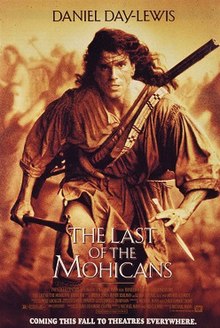
The Last of the Mohicans by James Fenimore Cooper

Mohicansposter.jpg
Out of all the reasons to enjoy reading, The Last of the Mohicans, by James Cooper, my favorite is the simple fact that two opposing forces are joined together for one common cause. Cooper does a marvelous job at presenting the difficulties that both Native American tribes, and the European settles have with the French invaders, but also a little with each other; creating a dramatic representation of history. He writes in the third person as one who is witnessing the events of the dynamic duo, Natty Bumppo, and his Indian friend, Chingachgook, as they try to regain their land from the Maquas Indians, and the British. Though we see these two as the sole characters involved with the invasion of Fort William Henry, it is Chingachgook's son, Uncas, who is the last of his tribe, and the one who is key to obtaining their land.

In my own mind I often wonder what James Cooper thought when he wrote this story. One could say that he wanted to rally both the settlers and Indians together against the French who were invading the land at the time. But it could also be said that Cooper simply wanted to write a dramatic historical fiction book, displaying some of the recent events of the day. Either way, I think no one would argue that this book is definitely part of a favorites list in any literature circle.

This entry is taken from the second volume and third chapter of the book; taking on the perspective of Uncas, right before he comes out and surprises Natty, and Chingachgook as they engage in a discussion of ancestory.

The air was crisp, the day was warm, and it seemed the spirits were shining their faces upon me. I could feel the gentle breeze flowing through the air, as I walked across the rough ground, and looked about the forest. My father told me he had gone to be with the white man so as to prepare for the attack on the Maquas, but I found it best to tracking them myself. I didn't know the white man well, but father seemed to like him. With each step, my shoulders tightened, and my neck grew firm. There was the edge. I knew it was because the air got thick and gray, and the ground grew smoother beyond the hill. The Maquas were not far. I chipped a slash in the side edge of the tree nearby, and stepped back the way I had came. It wasn't long before I heard the stream in it's steady tone answering to the silent calls of the trees, and I felt my heart lighten. My people had lived on this land forever, but the white man came and destroyed our village. We were doubtful at their trades and misgivings. We were angry when they took over our homes. We were sad when our chief was gone. But now all who is left is me and my father. Though now the Maquas want to take over. Will not the spirits grant us this victory? My eyes found the stream, and rested upon the two black figures sitting on the side of it. I could only see the back of the white man's head, and part of father's face, as I tuned my ears to hear someone say, "where are to be found your race, which came to their kin in the Delaware country, so many summers since." I assumed this to be the white man, and listened intently to my father's response, and found my name mentioned. Now I saw them both in plane view. "Uncas is here! who wishes Uncas?" 

Image URL: https://en.wikipedia.org/wiki/The_Last_of_the_Mohicans_(1992_film)


Tuesday, October 20, 2015

Rip Van Winkle by Washington Irving

I love the story of Rip Van Winkle, because it reminds me of my own life, and how often I feel when I encounter something from my childhood that brought me great enjoyment or pleasure. I dive into a world of deep emotion and serendipity as I recollect the significance of what I had known before my life presently, and wish at times I could turn the clock back. As Irving writes the tale of Rip Van Winkle, I can only image that he found recollections of his own life in which to attribute this story, maybe evening seeing himself as Winkle in some instances. In Winkle's case though, much of his past was loathsome, because of the demands of his nagging wife who found his ways to be, as Irving puts it, "impertinent". But though Winkle was a lazy man to himself all of his life, it seems at best to his character that this is also the source of his pleasure even after he as awaken some twenty years later, and finds his wife to be dead and gone. It is evident then, at the knowledge of his wife's death, and is contented simple ways, that he finds the most enjoyment out of his new  life. It proves a great lesson, that enjoyment in life comes from being contented with today, and I wonder if that was something Irving was learning himself.

To look at this story from a different perspective would not be hard, for Irving supplies many different supporting characters to help us grasp Rip Van Winkle's tale, and it is to some interest that we see it from all of their perspectives. I think Irving purposefully brings in his children and town's people, so that we see the importance of this man's life no matter how unprofitable it may seem to be. Many people can find themselves in a place where they feel that their life is worthless, and reaps no pleasure. Though Winkle finds pleasure in simplicity, this is also his downfall, as he counts other people as more important then himself. What this story suggests, is that regardless of how someone may feel about themselves, there is always someone else who holds worth to that person whether they see it or not. The very fact that his son and daughter, and really all the town's people, are so shocked at Winkle's appearance, shows us something of his worth, even though it was still in question who this man actually was at this point in the story. For years Winkle never saw his life as anything important only other people's, and certainly never cared enough for his children or his wife. But after meeting his children fully grown, and learning of his wife's death, he now sees his life differently and finds enjoyment out of being just who he was made to be.

HTML: http://brentbooks.blogspot.com/2012/03/what-was-theme-of-rip-van-winkle.html

Tuesday, October 13, 2015

The Tell-Tale Heart by Edgar Allen Poe

Most people are quite familiar with Poe's stories, because of their dark and gruesome plots, but also because Poe writes from the first person perspective of deeply disturbed "madmen" who hope to prove their sanity in killing people or things. In the Tell-Tale Heart, it is no different as the narrator tries to rid himself of an old man's "evil eye" by killing him. Due to the fact that most of Poe's writing are written through the eyes of the "madman," something compels me to see or understand how his victim(s) would feel. Though I am sure no one would want to be in the same situation as any murder victim, I feel this may indicate something about Poe's deeper fear in himself, since most of the time Poe writes as if he is the one killing, and never takes on that different perspective.

This journal entry is written then from the perspective of the old man, in The Tell-Tale Heart, who has been aroused in his sleep by some unknown fear. Little does he know that he will be attacked and killed within moments.

The air was thick as I jolted up my resting head. Something wasn't right. "Who's there?" I said with a low sullen voice. It was all I could do, to pull the blanket farther up my chest. I sat there timelessly with the thin blanket seemingly swallowing me up whole. I couldn't stand it, my heart grew faint, and then quickened the longer the darkness held. My eyes glazed over the darken sea of blackness, searching...searching for any familiar form it could find. Nothing. Something wasn't right. The darkness and silence seemed to slither up my back, and the fear bottled inside of me caused my stomach to lurch. "It is nothing," I thought. Yet I felt trapped and encased in the darkness. "It is nothing but the wind." I felt my muscles relax slightly as I felt the ever so small beam of moon light graze over my eye... but then,... wasn't the window on the other side of my bed, of which I could possibly see light? I tilted my head ever so slightly to the side, fearful of what I might glimpse. Terror escalated in my heart as I felt the presence of an unknown form in my room, releasing it into a low moan from my held breath. "IT...IS...NO ONE!" screamed my head to my quickening heart beat. My heart would not listen. I sat there longer, telling my deaf heart to listen, but it refused.Then.... I saw him! He screeched fiercely at me, and in my shear terror came at me engulfing me with his body. He moved swiftly and purposefully with his task, and as I realized that my defeat was soon at hand, I let out a final cry of horror from my mouth until I felt my mattress encase it. I thrashed hoping to gain the smallest molecule of air in which to fill my lungs, but the more I pushed the more he held. My lungs grew as stone, and I felt there weight hard pressed on my body, until I could no longer feel them. It was then that I was no longer afraid.    

Picture URL :http://www.britannica.com/biography/Edgar-Allan-Poe

Introduction

Hey everyone!

If you have ever seriously considered your life, I am sure most of us have pondered what it would be like to look at our lives through someone else's perspective, or as we would call it "stepping into someone else's shoes." I admit I did this quite often as a kid, and since I have a sister so close to me in age, I would imagine myself as her, and try to see what she sees when she looks at me. (It's not too hard when your a twin!) Though this does take a great deal of imagination on any ones part, I also found that it was extremely fun, and life changing, as you all can image. One of the reasons that I love literature so much, even if it is not just American Literature, is because you get a chance to look at life differently than that of your own perspective, and so in this blog that is exactly what I want to do. 

If you think about it each persons life is a story, and when each author writes a piece of literature, (whether it's a poem, a sonnet, a novel, or a play) they probably have a reason behind it. Unfortunately, unless we find a way to travel back in time, we probably will never know the true reason why. In playing around with this concept, what I want to do then is to look at a piece of literature from the eyes of another character's perspective in a story. This could be someone that I have made up, or an actual character that the author has written. My hope is, is that through changing our view point about a character, we can dive deeper into the purpose behind a piece of literature, and maybe find passage into the original thoughts of the author. 

These different perspective blogs will be post one of two ways. Sometimes they will be posted as journals, with short entries on how a character (not the main character) feels or thinks about a situation that is taking place in the story, or they will be more of an analysis response based on my thoughts about another character's point of view, either about a situation or their character's part in general. All of the stories will come from what we are reading in class. Both of these entries are definitely up for involvement, so if anyone has the desire to post something along with them, definitely feel free to do so!